Practical Life
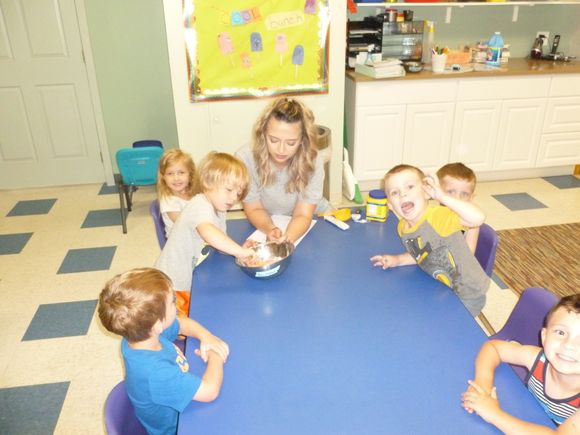
Practical Life exercises are the first activities we experience. These everyday skills are important because we use them throughout our lives.
We need to learn grace and courtesy in order to maintain balance and control over our body and mind.
We need to prepare the hand so that we can learn to write and manipulate objects we come in contact with every day.
We need to know how to take care of our own person first, and then we can experience the freedom to take care of our environment, including pets.
We need to know how to prepare food so we can stay energized and function fully.
Practical Life exercises must be mastered so that the child will develop to their fullest potential and take their place in the history of our world. As caretakers of the adults of tomorrow, it is our role to entice the child to work with purpose in everything they do!
Sensorial
A young child first perceives their world through their five senses: taste, touch, smell, hearing, and seeing.
Dr. Montessori designed Sensorial equipment that gives children the opportunity to develop order and broaden and refine their senses. As the child becomes independently involved, they discover their own capabilities. Therefore, a Montessori child becomes self-disciplined and develops an organized approach to solving problems, a positive influence in the world!
Language
Readiness for Language begins at home in infancy as the child absorbs oral language. A young child needs to be talked to and read to from birth onward.
Preparation for Language takes place in both Practical Life and Sensorial activities. In Practical Life, the child develops hand control. In Sensorial, the child learns visual discrimination.
The Language materials offered in a Montessori classroom break down the elements of reading. This enables the young child to experience the structure of Language in a concrete way.
These systematic activities teach the child, who can express themselves orally, how to analyze the sounds of language. The child learns that symbols represent these sounds. We communicate by using these symbols to represent our speech patterns.
Maria Montessori believed that if the environment is prepared with the appropriate materials, the child needs little formal instruction to experience an “explosion into writing.”
As caretakers of the adults of tomorrow, it is our role to teach our children today that communication is the means by which human beings share their passion for life with each other!
Mathematics
Mathematics is a way of looking at the world around us. It is a language for understanding and expressing measurable relationships in our world.
The purpose of developing Mathematics is to help the child acquire the tools that allow them to function in society and interact with others. A true Montessori classroom creatively uses appropriate didactic materials to meet this purpose.
Montessori is a reality-based philosophy. Our world depends on mathematics…from counting pennies to cooking oatmeal. Children come into contact with numbers early on in life. The goal is to understand math…logical mathematical thinking…not computing.
Mathematical ideas awaken in the young child first through materials in the practical life area in a Montessori environment. These activities develop coordination between the brain and the senses. Sensorial exercises provide concrete, manipulative experiences for discovering perceptual relationships.
Pre-math activities appear in all areas of a Montessori classroom. A child is most “sensitive” from 3 to 5 ½ years of age. At this time, it is easier to introduce the child to concepts of numeration, the decimal place value system, and linear counting.
The Montessori Teacher is prepared with working knowledge of Mathematical skills and knows how to set up the environment with the appropriate materials for the child to experience yet another dimension of the world in which they live.
Physical Science
Picture a young child standing in a field feeling the wind blowing across their face. The child asks, “What is air?”
Can you see the toddler listening for the bird in the birdbath to sing again? “Why does that bird sing?”
Imagine a small child outside with their face turned up, tasting the snow and asking,
“What is snow made of?”
You can see from your window a young boy who stops digging with a stick in the dirt and watches an ant. He says, “How did the ants build this hill?”
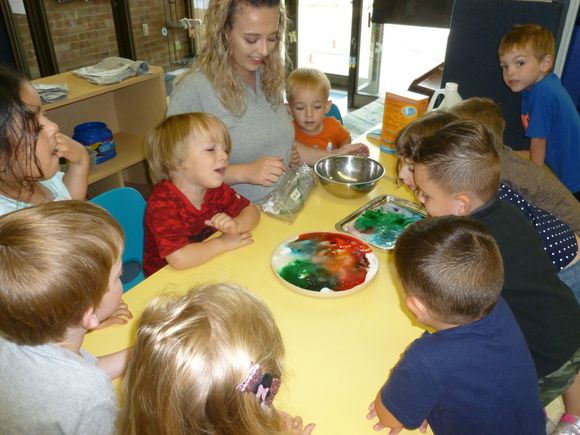
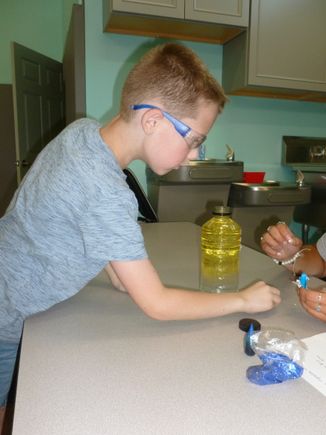
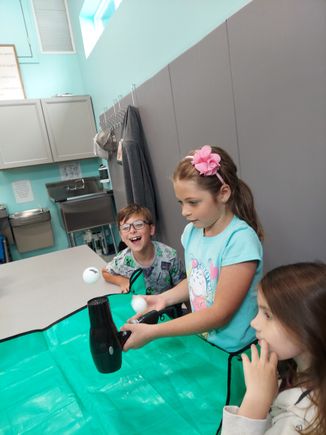
We teach young children physical science to promote their sense of inquiry. Why, What, When, Who, and How are some of the first words they learn. Young children are so curious, and as adults, we need to help them find answers to their questions. We need to show them how to experience the world around them.
Experiencing physical science will help the children of today come up with solutions to the challenges of tomorrow, which just happens to be their future!
Ecology
An introduction to the lifelong study of ecology is a must for the young child. Children will learn to value the earth around them as they become increasingly aware of what is needed to maintain the balance of nature.
As responsible adults and Montessori Educators, we must model respect for our living world. The need to develop creative ways to utilize progress rests in “all” our hands….
We need to make sure that our children of today develop a consciousness that they are the caretakers of the Earth of tomorrow!
Geology
Through the study of Geology, children realize that the Earth’s past is recorded in the rocks. Hopefully, this helps children recognize the treasures at their feet and realize that our planet is in a constant state of change.
Botany
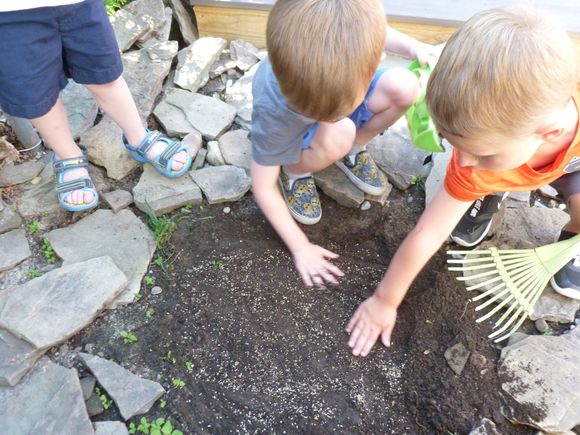
Through the study of Botany, children realize that without plants, we couldn’t breathe the air we need to sustain life. An early appreciation of plant life will develop a sense of wonder and love for all living things.
This love will empower our children to strive to be responsible caretakers of the Earth. Our planet will respond by continuing to nurture them, their children, and their children’s children. Earth is our home!
Zoology
Through the study of Zoology, children learn that there are other animals to appreciate beyond human beings.
A sense of “wonder” and “love” for all that is living develops quickly as a child becomes aware of their place in the Animal Kingdom. Knowledge of the “creation” around them brings “respect.” This “respect” is a must, for many living things call Earth home. Our children must learn at an early age how to live with others in order for there to be “Peace on Earth!”
Geography
Children need to be introduced to Geography in order to help them place themselves on this planet Earth in and on…
• The actual spot we occupy
• Rooms
• Houses
• Neighborhoods
• Cities
• Counties
• States
• Countries
• Continents
• Air, Land, Water
Hopefully, this will lead to a love for the land and for its peoples.
History
History is the recorded progression of humankind’s impact on the earth. To appreciate our past achievements, children need to be introduced to abstract historical concepts early. This is difficult, but not impossible, because our children are always in the present.
History helps a child locate their place in time so they can continue to appreciate human development.
Astronomy
Children should be exposed to the study of Astronomy at an early age because it shows them that there are other orbs besides Earth.
Children will become aware of their place in space and in the space race.
Realizing their relationship to the cosmos will hopefully develop a sense of wonder, excitement, and a quest for the future.
Music
Children love songs and music from a very early age. The world is a delight when a child is introduced to music. Concepts of loud and soft, high and low, short and long, fast and slow, carry over to other parts of their world.
Introduction to composers and learning to move to the “beat” is all a part of being human. The world’s peoples are all united by the “heartbeat” of our Earth!
Art
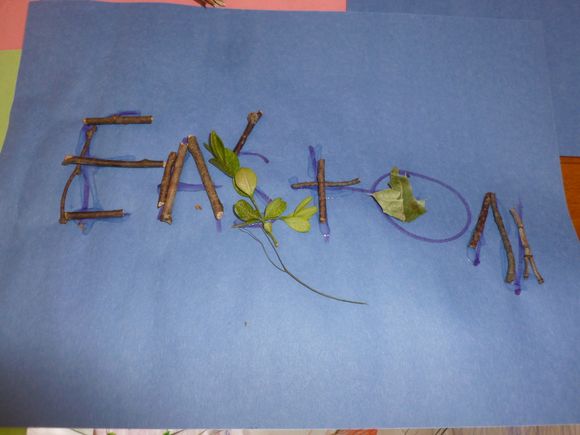
The foundation for artistic development is laid in a child’s early years. In a Montessori classroom, children refine eye-hand coordination by using a brush, sculpting play dough, sewing, cutting, etc.
Introducing artists and art styles connects the child to the colors, forms, and textures of the world and its peoples. What a priceless gift we give children when we encourage them to express their love of nature, self, and others in the art that they make!
General Information
Early Childhood Goals
1. To provide an environment in which curiosity and the joy of discovery and understanding motivate learning.
2. A place where children are encouraged to learn to question, to become involved, to live and work together, and to learn by helping one another.
3. To provide an atmosphere which frees the child’s potential for self-development.
4. To help the child to discover the joys of intellectual and artistic endeavor, and to grow through activities that stimulate and fulfill individual abilities.
To provide an extended family that will enhance well-being